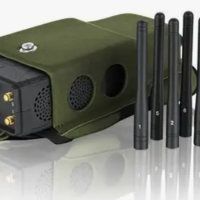
A world where every conversation is open to the public, where privacy is a thing of the past, and where the flow of information is as free as the wind. This is the world we live in today, where technology has made communication faster and more accessible than ever before. But with great power comes great responsibility, and sometimes, the need for control. This is where signal jammers come in, devices designed to disrupt and control the flow of signals, ensuring that certain conversations remain private or that sensitive areas are protected from unwanted electronic interference.
Signal jammers are not just tools for privacy; they are also essential in maintaining security and order. They are used in a variety of settings, from government facilities to educational institutions, and their applications are as diverse as the signals they disrupt. But how do these devices work, and what makes them so effective? Let’s dive into the world of signal jammers and explore their inner workings and the various scenarios where they are employed.
The Mechanism Behind Signal Jamming Signal jammers work on a simple yet effective principle: they emit a signal that interferes with the transmission of other signals. This interference can be in the form of a constant noise or a more sophisticated mimicry of the signal, effectively drowning out the original signal and preventing it from being received or transmitted. The technology behind signal jammers is constantly evolving, with advancements in digital signal processing and radio frequency management allowing for more precise and targeted jamming.
One of the key components of a signal jammer is its ability to target specific frequencies. This is crucial in ensuring that only the desired signals are disrupted, while others remain unaffected. For instance, a signal jammer used in a prison might target mobile phone frequencies to prevent inmates from communicating with the outside world, while leaving radio and television signals intact. This selective jamming is made possible through the use of sophisticated filtering and frequency modulation techniques.
Applications of Signal Jamming in Various Settings Signal jammers are used in a wide range of settings, each with its own unique set of challenges and requirements. Let’s take a look at some of these settings and how signal jammers are employed to maintain security and privacy.
Government and Military Applications In the realm of government and military operations, signal jammers play a critical role in ensuring the security of sensitive information and operations. They are used to prevent unauthorized communication, protect against surveillance, and maintain the integrity of secure networks. For example, during military exercises or in war zones, signal jammers can be deployed to disrupt enemy communications, giving the friendly forces a tactical advantage.
Educational Institutions Signal jammers are also finding their way into educational institutions, particularly in the context of examinations. By jamming mobile phone signals, these devices help to prevent cheating and ensure the fairness of exams. This is particularly important in an era where information can be easily accessed and shared through smartphones and other mobile devices.
Corporate and Industrial Settings In corporate and industrial settings, signal jammers can be used to protect trade secrets and sensitive information. By preventing unauthorized communication, these devices help to maintain the competitive edge of businesses and safeguard valuable intellectual property. This is especially crucial in industries where the theft of information can lead to significant financial losses and damage to reputation.
Public Events and Transportation Signal jammers are also used in public events and transportation hubs to maintain order and safety. For instance, in crowded areas such as airports, train stations, or sports stadiums, signal jammers can be deployed to prevent the use of mobile devices that could potentially be used to trigger explosive devices or disrupt the event. This is a critical measure in the age of terrorism and other security threats.
The Ethics and Legality of Signal Jamming While signal jammers offer significant benefits in terms of security and privacy, their use also raises ethical and legal questions. The disruption of signals can infringe on individual rights to communication and may be seen as an invasion of privacy. As such, the use of signal jammers is regulated in many jurisdictions, with strict guidelines on their deployment and operation. It is important for organizations and individuals to be aware of these regulations and to use signal jammers responsibly and within the bounds of the law.
The Future of Signal Jamming Technology As technology continues to advance, so too does the technology behind signal jammers. We can expect to see more sophisticated and targeted jamming capabilities in the future, as well as the development of new countermeasures to combat signal jamming. This ongoing technological arms race will likely shape the landscape of communication and security for years to come.
In conclusion, signal jammers are a powerful tool in the realm of communication control. They offer a means to protect privacy, maintain security, and ensure the integrity of sensitive information. However, their use must be balanced with considerations of ethics and legality. As we continue to navigate the complex world of electronic communication, signal jammers will undoubtedly play a significant role in shaping our future.